
Grilling steak on a gas grill is like unlocking the secret to a backyard feast. You get that smoky aroma, sizzling sound, and a perfectly cooked steak that melts in your mouth. Did you know cooking steak is America’s favorite barbecue food? Gas grills dominate the market, with over 57% of grill enthusiasts choosing them. So, fire up your grill and get ready to create a delicious gas grilled steak that will make your taste buds dance. Follow these step-by-step instructions, and you’ll master how to cook steak like a pro.
Selecting the Best Steak for Grilling

Recommended Cuts for Grilling
Choosing the right cut of steak is like picking the star of your backyard barbecue show. Not all steaks are created equal, and some cuts shine brighter on the grill. Here are a few crowd favorites:
- Ribeye: Known for its rich marbling, this cut delivers unbeatable tenderness and flavor.
- New York Strip: A leaner option with a bold, beefy taste. Perfect for those who love a firm bite.
- Filet Mignon: The king of tenderness. This cut melts in your mouth but has less fat, so it’s best for quick grilling.
- T-Bone/Porterhouse: A two-in-one treat! You get the tenderloin on one side and the strip steak on the other.
Why do these cuts work so well? It’s all about the marbling—the streaks of fat running through the meat. Marbling equals flavor, and flavor equals happiness. Studies show that well-marbled cuts like ribeye are top picks for their juicy texture and rich taste.
Choosing Quality: Organic, Grass-Fed, and Marbling
When it comes to selecting the best steak, quality matters. Organic and grass-fed options are gaining popularity, but what’s the difference?
| Type of Steak | Grilling Quality | Nutritional Benefits |
|---|---|---|
| Grain-Fed | Richer taste and texture due to marbling | Higher fat content, sweeter taste |
| Grass-Fed | Drier and chewier, more finicky to cook | Fewer calories, higher omega-3 and CLA levels |
Grain-fed beef often wins hearts with its buttery texture and sweeter flavor. It’s the go-to choice for many grill enthusiasts. Grass-fed beef, on the other hand, has a gamier taste and is leaner, making it a bit trickier to cook. If you’re looking for a healthier option, grass-fed steaks pack more omega-3s and fewer calories.
Pro tip: Look for steaks with even marbling. It’s the secret to a juicy, flavorful bite every time. Whether you choose organic, grass-fed, or grain-fed, the right steak paired with the right grilling techniques will always steal the show.
Preparing the Steak for Cooking
Patting Dry and Bringing to Room Temperature
Before you even think about grilling, you need to prep your steak like a pro. Start by patting it dry with paper towels. Why? Excess moisture on the surface can prevent that beautiful crust from forming. A dry steak equals a better sear.
Next, let the steak rest at room temperature for about 30 minutes. This step ensures even cooking. A cold steak straight from the fridge can cook unevenly, leaving you with a charred outside and an undercooked center. Proper temperature control is key to achieving the perfect oven grilled steak. Plus, it helps the Maillard reaction work its magic, creating those rich, caramelized flavors you crave.
Seasoning: Salt, Pepper, and Rubs
Now comes the fun part—seasoning! To season your steak, stick to the classics: salt and pepper. These two simple ingredients can transform your steak into a flavor-packed masterpiece. Research shows that salt enhances the beef’s natural taste, while pepper adds a subtle kick. Sprinkle generously on both sides, pressing it into the meat for maximum impact.
Feeling adventurous? Add a rub with garlic powder, smoked paprika, or even a hint of cayenne. Herbs and spices can elevate the flavor profile, but don’t overdo it. Let the steak’s natural taste shine through. Remember, seasoning is all about balance.
Optional Brining for Enhanced Flavor
Want to take your steak to the next level? Try brining. This technique involves soaking the steak in a saltwater solution before cooking. Brining locks in moisture and boosts flavor, especially for leaner cuts. It’s like giving your steak a spa day before it hits the grill.
For a quick brine, dissolve ¼ cup of salt in 4 cups of water. Submerge the steak for 30 minutes to an hour, then pat it dry before grilling. This step ensures a juicy, tender bite every time. Whether you’re cooking steak in the oven or on the grill, brining can make all the difference.
Preheating the Gas Grill
Setting the Temperature to 500°F
Preheating your gas grill is like warming up before a big game—it’s non-negotiable. Set your grill to 500°F, the sweet spot for steak perfection. Why this temperature? It’s all about the Maillard reaction. This magical process happens when high heat meets your steak, creating that irresistible golden-brown crust and unlocking deep, savory flavors. Without it, your steak might taste flat and lifeless.
Cooking at 500°F also ensures your steak cooks evenly. A cold grill can sabotage your efforts, leaving you with a chewy, underwhelming result. Preheating allows the exterior to sear beautifully while the inside stays juicy and tender. Plus, it speeds up the cooking process, so you spend less time grilling and more time enjoying your meal.
Here’s a quick guide to preheating:
- Turn on your grill and set it to high heat.
- Close the lid and let it heat up for 20 to 30 minutes.
- Use a thermometer to confirm the temperature has reached 500°F.
| Temperature Range | Preheating Time |
|---|---|
| 450°F to 500°F | 20 to 30 minutes |
Remember, a hot grill is your best friend when cooking steak. It helps lock in those precious juices and gives you that restaurant-quality finish every time.
Cleaning and Oiling the Grates
Before you toss your steak on the grill, take a moment to clean and oil the grates. Trust me, this step is worth it. Dirty grates can ruin your steak by causing it to stick or pick up unwanted flavors from last week’s barbecue.
Start by scrubbing the grates with a grill brush while the grill is still warm. This makes it easier to remove any leftover residue. Once clean, grab a paper towel, dip it in oil, and use tongs to rub it across the grates. This creates a non-stick surface and helps your steak cook evenly.
Pro tip: Use oils with a high smoke point, like canola or grapeseed oil. They won’t burn at high temperatures, keeping your steak’s flavor pure and delicious. With clean, oiled grates and a preheated grill, you’re ready to create the ultimate oven grilled steak.
How to Grill a Steak on a Gas Grill
Cooking Times for Desired Doneness
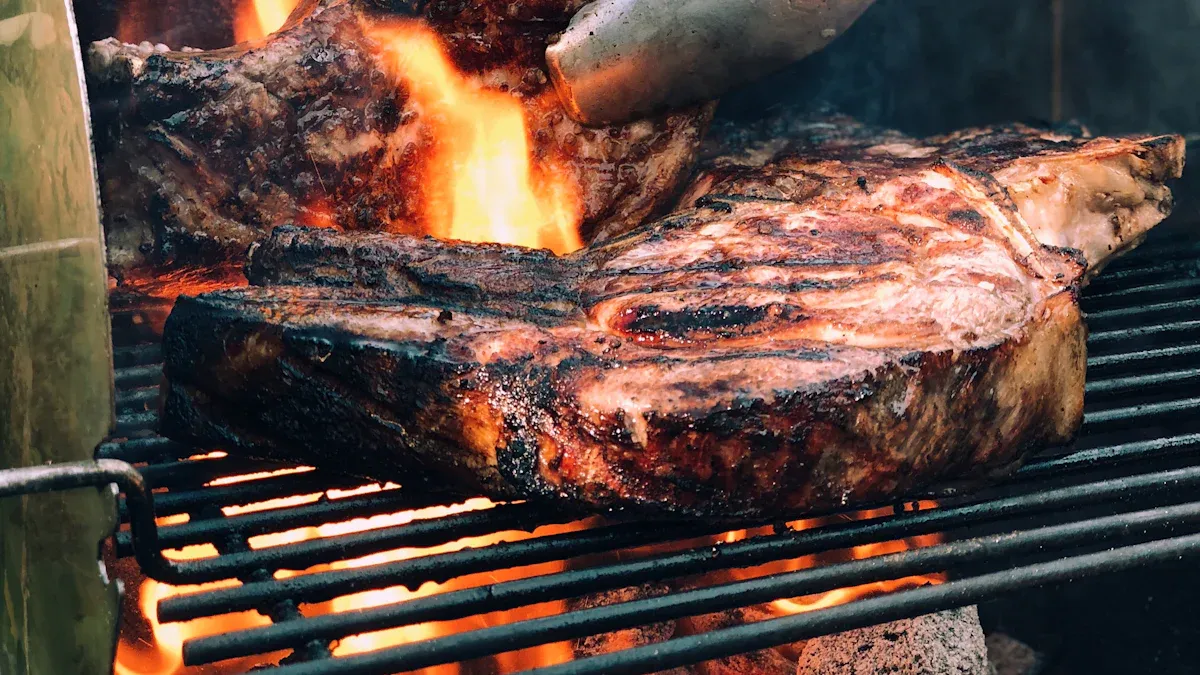
Timing is everything when you grill a steak. Whether you like it rare or well-done, knowing the right cooking times ensures you hit your desired level of doneness every time. Here’s a quick guide to help you master this:
| Doneness Level | Internal Temperature (℉) | Grill Time (minutes per side) |
|---|---|---|
| Rare | 135-145 | ~4.5 |
| Medium Rare | 145-155 | ~5.5 |
| Medium | 155-165 | ~6.5 |
| Medium Well | 165+ | ~8-10 |
For the perfect grilled steak, preheat your grill to 500°F. Cook each side for about 4 minutes, then check the internal temperature. This method locks in juices while giving you that charred, smoky flavor. Remember, thicker steaks may need a little extra time, so keep an eye on them.
Flipping and Rotating for Grill Marks
Want those Instagram-worthy grill marks? It’s all about timing and technique. Place your steak on the grill and let it sit undisturbed for a few minutes. Flip it once to avoid losing those beautiful sear lines. For cross-hatched marks, rotate the steak 45 degrees halfway through cooking each side.
Pro tip: Avoid flipping too often. Multiple flips can mess up the marks and even dry out your steak. A single flip is your best bet for a picture-perfect steak.
Using a Thermometer for Accuracy
Guesswork has no place in grilling. To achieve the perfect steak, invest in an instant-read thermometer. It’s the only reliable way to check if your steak has reached the desired level of doneness. Poking or cutting into the steak can release precious juices, but a thermometer keeps them intact.
Here’s a tip: Insert the thermometer into the thickest part of the steak for the most accurate reading. This small step ensures your steak is cooked to perfection every time.
Reverse Searing on a Gas Grill
The reverse sear method is a game-changer for steak lovers. Start by cooking your steak on low heat until it’s almost done. Then, crank up the heat and sear each side for a minute or two. This technique gives you a juicy interior with a crispy, caramelized crust.
Research shows that reverse searing works wonders for thicker cuts. It prevents the outside from burning while ensuring even doneness throughout. If you’re aiming for steakhouse-quality results, this is the way to go.
Resting and Serving the Steak
Why Resting Keeps Steak Juicy
After grilling your steak, don’t cut it right away. Resting helps keep it juicy and tender. Cooking pushes juices to the center of the steak. If you slice it too soon, the juices will spill out. This can make your steak dry and less tasty.
Resting lets the juices spread evenly through the meat. This makes every bite flavorful and moist. Studies show resting for 10 minutes saves more juices than slicing immediately. For example:
| Experiment | Juices Lost (tablespoons) | Resting Time |
|---|---|---|
| Sliced Immediately | 10 | 0 minutes |
| Rested 10 Minutes | 4 | 10 minutes |
| Rested Longer | Less | More than 10 minutes |
So, wait before cutting your steak. Cover it lightly with foil and rest it for 5–10 minutes. This small step gives you a tender, juicy steak full of flavor.
How to Slice for Tenderness
Cutting steak the right way matters. Always slice against the grain. This means cutting across the muscle lines, not along them. It makes the steak easier to chew and more tender. A well-sliced steak is a joy to eat, and everyone will love it.
Best Sides to Serve with Steak
A steak meal needs great sides to feel complete. Choose sides that match the steak’s rich flavor. Here are some tasty ideas:
- Grilled asparagus adds a smoky, fresh taste.
- A green salad with vinaigrette balances the steak’s richness.
- Creamy potato salad is a classic, hearty choice.
- Elote (Mexican street corn) adds sweet and spicy flavors.
These sides make your steak dinner extra special. Whether it’s a barbecue or a quiet meal, these pairings will make your steak unforgettable.
Cooking steak on a gas grill makes a tasty meal. Every step, from picking the steak to letting it rest, turns it into something special.
Gas grills are easier to use but don’t get as hot as charcoal. They also don’t add the same smoky flavor. It’s a choice between ease and taste.
- Grilling steak cooks it quickly at high heat.
- Controlling the heat stops burning and cooks it just right.
Try different spices and sides to make it amazing!