
Introduction
A commercial refrigerator is one of the most important investments in a restaurant, hotel, bakery, supermarket, school canteen, or central kitchen. It protects ingredients, supports food safety, and helps the kitchen operate efficiently during busy service periods.
However, choosing the right model involves more than comparing prices or cabinet dimensions. A refrigerator that is too small may create storage problems, while an oversized unit can waste kitchen space and energy. The wrong door configuration, cooling system, or installation position can also slow down daily work.
This commercial refrigerator buying guide explains eight practical factors to consider before placing an order.
1. Storage Capacity and Daily Demand
Start by estimating how much refrigerated food your business needs to store between deliveries. Consider:
- The number of meals or customers served each day
- The frequency of ingredient deliveries
- Peak-season demand
- The types and sizes of food containers
- The amount of backup stock required
Usable storage space is more important than the refrigerator’s external volume. Shelves, evaporator components, door clearance, and air circulation all affect how much food can actually be stored.
Avoid filling the cabinet completely. Cold air needs room to circulate around products. A well-sized refrigerator should meet normal demand while leaving enough space for organized storage and airflow.
For large kitchens, several task-specific refrigerators may be more efficient than one oversized cabinet. Separate units can also help keep raw ingredients, prepared foods, beverages, and specialty products organized.
2. Temperature Range and Food Type
Different products require different storage conditions. Before selecting a refrigerator, identify what will be stored and the temperature range required by your operating procedures and local food-safety rules.
Common applications include:
- Fresh meat and seafood
- Dairy products
- Fruit and vegetables
- Prepared ingredients
- Beverages
- Bakery fillings and desserts
Choose a unit with stable temperature control and an easy-to-read display. A digital controller can help staff check operating conditions quickly. High- and low-temperature alerts are also useful in kitchens where equipment is monitored throughout the day.
If your menu uses ingredients with significantly different storage requirements, consider separate cabinets or independently controlled compartments instead of storing everything together.
3. Refrigerator Type and Kitchen Workflow
The best refrigerator design depends on where and how staff will use it.
Reach-in refrigerator
A reach-in cabinet provides upright refrigerated storage and works well for general kitchen use. It offers good capacity without occupying as much floor area as a walk-in room.
Undercounter refrigerator
An undercounter model places ingredients close to the preparation or cooking station. It is suitable for kitchens that need fast access and additional worktop space.
Refrigerated worktable
This design combines cold storage with a preparation surface. It is commonly used for pizzas, salads, sandwiches, and other made-to-order foods.
Display refrigerator
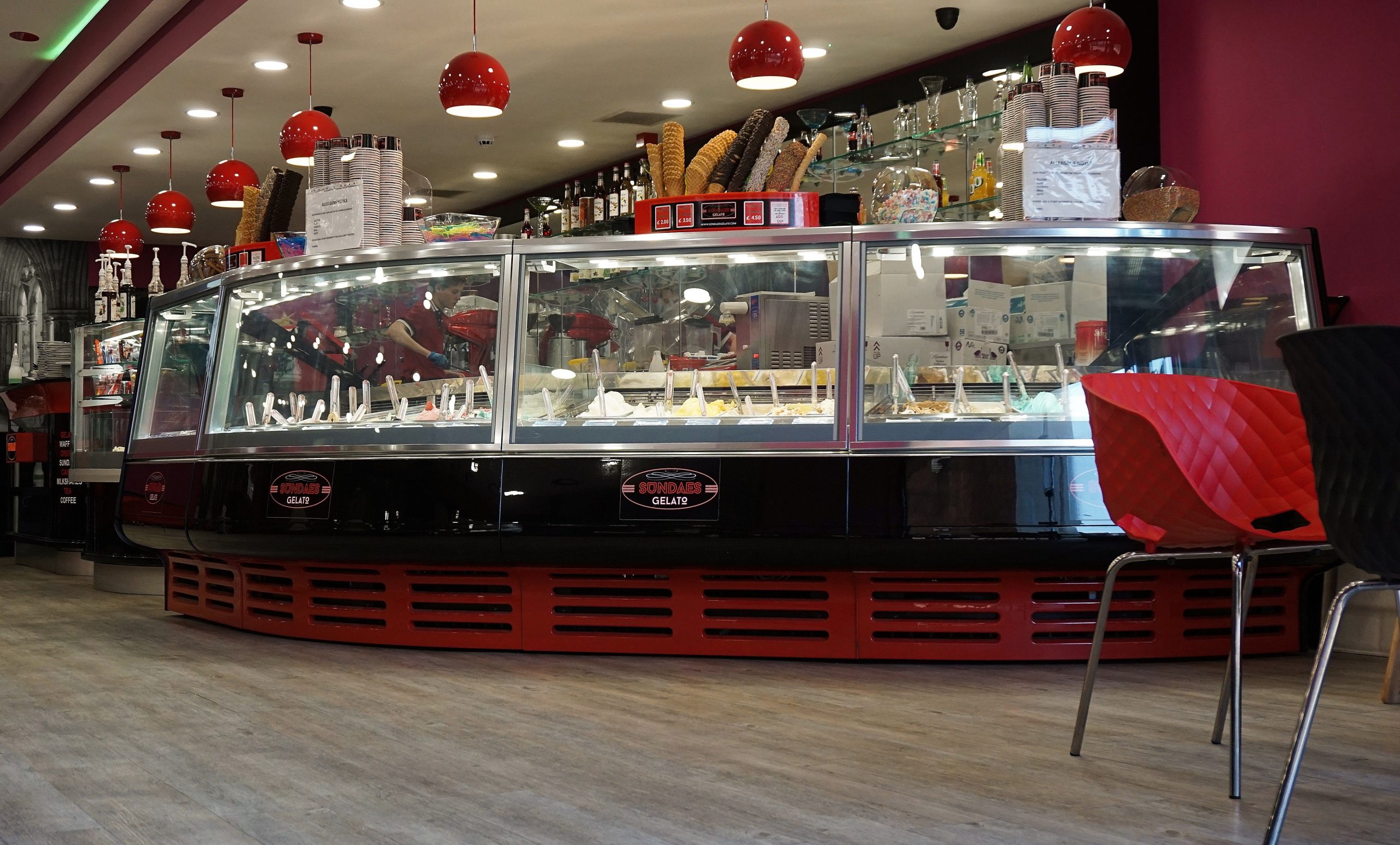
A glass-door cabinet allows customers or staff to see products without opening the door. It is often used in supermarkets, cafes, convenience stores, and beverage areas.
Walk-in cold room
A walk-in system is designed for high-volume storage. It requires more planning for insulation, refrigeration capacity, drainage, access, and installation.
Map the path from receiving and storage to preparation and service. The refrigerator should support that workflow rather than create unnecessary movement or congestion.
4. Cooling System and Ambient Conditions
Commercial kitchens can be hot, humid, and busy. The refrigerator must be designed for the actual environment in which it will operate.
Fan-assisted cooling generally provides faster and more even temperature distribution throughout the cabinet. Static cooling may suit certain products but can produce greater temperature differences between shelves.
Also consider the condensing-unit arrangement:
- Top-mounted systems are less exposed to floor dust and may perform well in hot kitchen environments.
- Bottom-mounted systems can be easier to access for maintenance and may provide a lower loading height.
- Remote systems move compressor heat and noise away from the cabinet but require additional installation work.
Check the manufacturer’s stated operating climate and ventilation requirements. Placing a refrigerator beside an oven, fryer, or other heat-producing appliance can increase energy consumption and reduce performance. Adequate clearance around ventilation openings is essential.
5. Energy Efficiency and Operating Cost
The purchase price is only one part of the total cost. A commercial refrigerator may operate continuously for years, so energy consumption can have a significant effect on operating expenses.
Look for features such as:
- High-quality cabinet insulation
- Efficient compressors and fan motors
- Tight door gaskets
- Automatic door-closing mechanisms
- LED interior lighting
- Effective defrost controls
- Clear energy-performance information
The lowest-priced refrigerator is not always the most economical choice. Compare expected energy use, maintenance needs, available spare parts, and service life.
Daily operating habits matter as well. Staff should avoid leaving doors open, loading hot food directly into the cabinet, or blocking internal air outlets. Regular condenser cleaning can also help the refrigeration system work efficiently.
6. Construction Material and Durability
Commercial refrigeration equipment must withstand moisture, food residue, cleaning chemicals, frequent door opening, and heavy daily use.
Stainless steel is widely used because it is strong, easy to clean, and suitable for professional food-service environments. When comparing models, check which parts are stainless steel. Some products use stainless steel only on the front, while the sides, interior, or rear panels may use different materials.
Inspect or confirm the quality of:
- Door hinges and handles
- Shelf supports
- Adjustable feet or casters
- Interior corners and drainage points
- Door gaskets
- Control panels
Rounded internal corners and removable shelves make cleaning easier. Strong hinges and replaceable gaskets can reduce long-term maintenance costs. If the unit will be moved for cleaning, durable casters with brakes may be more practical than fixed feet.
7. Door Configuration and Available Space
Door design affects both capacity and workflow. Full-height doors provide wide access, while half doors reduce cold-air loss when staff only need products from one section. Drawers can be convenient under preparation counters and cooking stations.
Choose between:
- Solid or glass doors
- Hinged or sliding doors
- Full-height or half-height doors
- Doors or refrigerated drawers
Measure more than the intended installation space. Confirm:
- Door-opening clearance
- Ventilation clearance
- Delivery-route width and height
- Elevator and doorway dimensions
- Power-supply position
- Floor level and drainage conditions
A refrigerator that fits the final position may still be impossible to move through a narrow doorway. Accurate site measurements should be completed before production or delivery.
8. Maintenance, Spare Parts, and Supplier Support
Even reliable equipment needs cleaning and periodic service. A refrigerator that is easy to maintain can reduce downtime and make routine tasks more consistent.
Ask the supplier about:
- Warranty coverage and exclusions
- Availability of compressors, controllers, fans, gaskets, and other spare parts
- Electrical specifications and refrigerant type
- Technical documentation
- Installation requirements
- Troubleshooting and after-sales support
Serviceable components should be reasonably accessible. Condenser filters, shelves, drainage parts, and door gaskets should be easy to remove and clean where applicable.
For imported equipment, confirm voltage, frequency, plug type, refrigerant requirements, and local service availability before ordering. These details are especially important for distributors and project contractors working across different markets.
Commercial Refrigerator Pre-Purchase Checklist
Before requesting a quotation, prepare the following information:
- Products that will be stored
- Required temperature range
- Estimated storage volume
- Preferred cabinet and door configuration
- Installation-space dimensions
- Ambient kitchen conditions
- Local voltage and frequency
- Delivery-route measurements
- Required certifications or project specifications
- Expected delivery date and destination
Providing complete information helps the supplier recommend a suitable model and reduces the risk of changes during installation.
Conclusion
The right commercial refrigerator should match your storage demand, food type, kitchen workflow, available space, and local operating conditions. Capacity and price are important, but energy use, construction quality, maintenance access, and supplier support also influence the equipment’s long-term value.
Clyde Kitchen supplies commercial refrigeration equipment for restaurants, hotels, supermarkets, canteens, and food-service projects. Share your required dimensions, storage products, temperature range, electrical standard, and project quantity with our team to receive a suitable equipment recommendation.
Frequently Asked Questions
How large should a commercial refrigerator be?
The correct size depends on daily ingredient demand, delivery frequency, menu complexity, and available kitchen space. Choose enough usable capacity for organized storage and cold-air circulation without purchasing a unit that is unnecessarily large.
Is a glass-door or solid-door refrigerator better?
Glass doors make products easy to identify and are useful for displays or frequently accessed items. Solid doors generally provide better insulation and are suitable for back-of-house storage. The right choice depends on the application.
Where should a commercial refrigerator be installed?
Install it on a stable, level surface with the ventilation clearances specified by the manufacturer. Keep it away from ovens, fryers, direct sunlight, and other heat sources whenever possible.
What information should I give a refrigerator supplier?
Provide the required temperature, stored products, capacity, dimensions, door style, ambient conditions, voltage, frequency, destination, and any certification requirements. Photos or a layout drawing can help with project-based recommendations.